


The Difference Between a Café and a Specialty Coffee Roastery
What job do each place do?
Content
You might buy coffee in a café every morning without giving much thought to where the beans came from.
You notice the barista, the espresso machine, the milk texture and whether there is a seat by the window. All of that matters. But long before the coffee reaches the café, someone has chosen it, bought it, roasted it and worked out how to get the best from it.
That is where a specialty coffee roastery comes in.
A café and a roastery are closely connected, but they do very different jobs.
A café is where coffee becomes part of your day.
It is the flat white on your way to work, the cappuccino after a walk, the espresso at the counter or the coffee you share with someone who said they only had twenty minutes.
The café team focuses on making each cup well. They dial in the espresso, steam the milk, adjust the grind, keep the equipment clean and make sure the coffee tastes as it should from the first order of the day to the last.
Great cafés also make people feel welcome. The coffee matters, but so does the atmosphere, the conversation and the familiar face behind the machine.
A specialty coffee roastery begins with green coffee: the unroasted beans that arrive from coffee-growing countries around the world.
Before a coffee ever becomes an espresso or pour-over, the roaster has to make a series of decisions.
Which coffees are worth buying? What is the harvest like? How was it processed? What flavours does it have? Will it work best as espresso, filter coffee or both?
The roaster then develops a roast profile for each coffee. This is the process of controlling time, temperature and airflow to bring out the best in the bean.
A coffee that tastes like chocolate and caramel needs a different approach to one with jasmine, citrus and tea-like acidity. The aim is not to make every coffee taste the same. It is to let each one taste like itself.
Think of it this way: the roastery creates the recipe, and the café makes the final dish.
The roaster decides how a coffee should taste at its best. The café team then has to make that potential show up in the cup, every single day.
That means the two sides need to work together.
If a coffee is roasted for espresso, the barista still needs to adjust the grinder, dose, yield and extraction time. A small change in any of these can turn a sweet, balanced coffee into one that tastes sour, bitter or thin.
The same is true for milk. A well-roasted coffee can still disappear if the milk is too hot or badly textured. Good baristas know how to keep the coffee present, whether you order a straight espresso or a large latte.
When a café works closely with a specialty roastery, there is more information behind the cup.
The café team can tell you where the coffee came from, what it should taste like and how it has been roasted. They can recommend something different if you usually order a flat white but want to try black coffee, or if you like chocolatey flavours but do not enjoy sharp acidity.
That connection also makes it easier to keep standards high. If a coffee is not tasting right, the café and roastery can work together to find out why.
Sometimes it is the grinder. Sometimes it is the water. Sometimes the coffee needs a small adjustment in the roaster. Either way, the goal is the same: a better cup.
Absolutely.
Some of the best coffee experiences come from businesses that roast their own coffee and serve it in their own cafés. They can taste the coffee every day, hear what customers enjoy and see how each roast works in the real world.
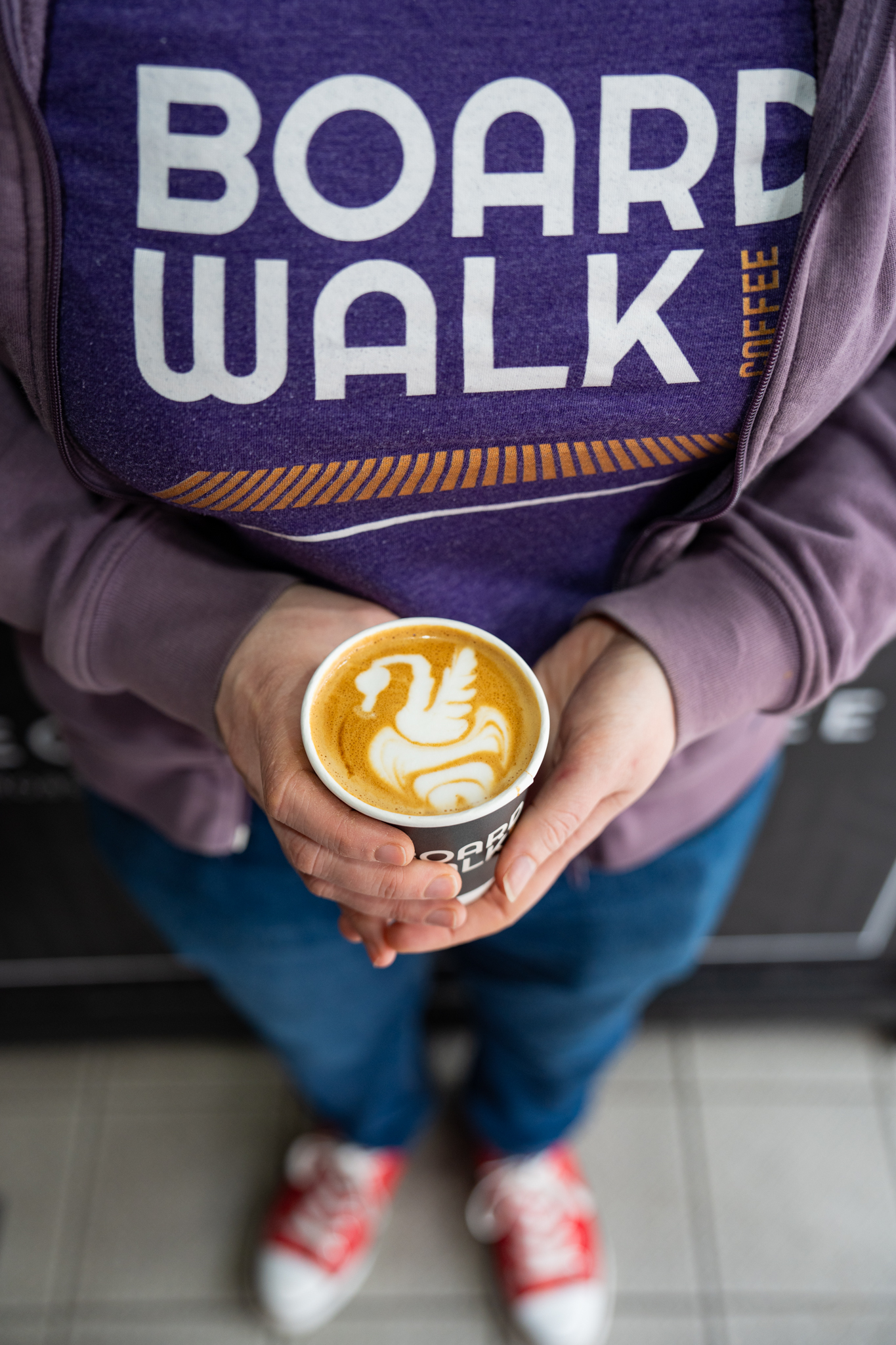
At Boardwalk, that connection matters to us. Our roastery is where we source and roast coffees with character. Our cafés are where those coffees are served, talked about and enjoyed.
One side gives us the chance to focus on the bean. The other reminds us why the bean matters in the first place.
A café is where you drink coffee.
A specialty coffee roastery is where the coffee is selected and roasted.
The best cafés make great coffee in the moment. The best roasteries give them great coffee to work with. When both are paying attention, you can taste the difference.



.svg)
