


Which Brew Method Actually Fits Your Life
French Press vs Pour Over vs Espresso vs Aeropress
Content
Same beans, different results: Every method extracts the same beans differently, so “best” depends on what you're optimising for: time, body, clarity, or portability.
Technique over equipment: Grind size, water temperature, and brew time matter more than the equipment brand you buy.
Habit over fit: Most people default to whatever method they learned first, not the one that actually fits their morning.
How it works: Coarse grounds steep in hot water for four minutes, then a metal mesh plunger separates the liquid from the grounds.
Flavour profile: Heavy body and full mouthfeel, with some sediment, because the metal filter lets natural oils through.
Time required: About five minutes, most of it hands-off.
Best for: Anyone who wants strong, rich coffee without learning a technique, and doesn't mind cleaning grounds out of a carafe.
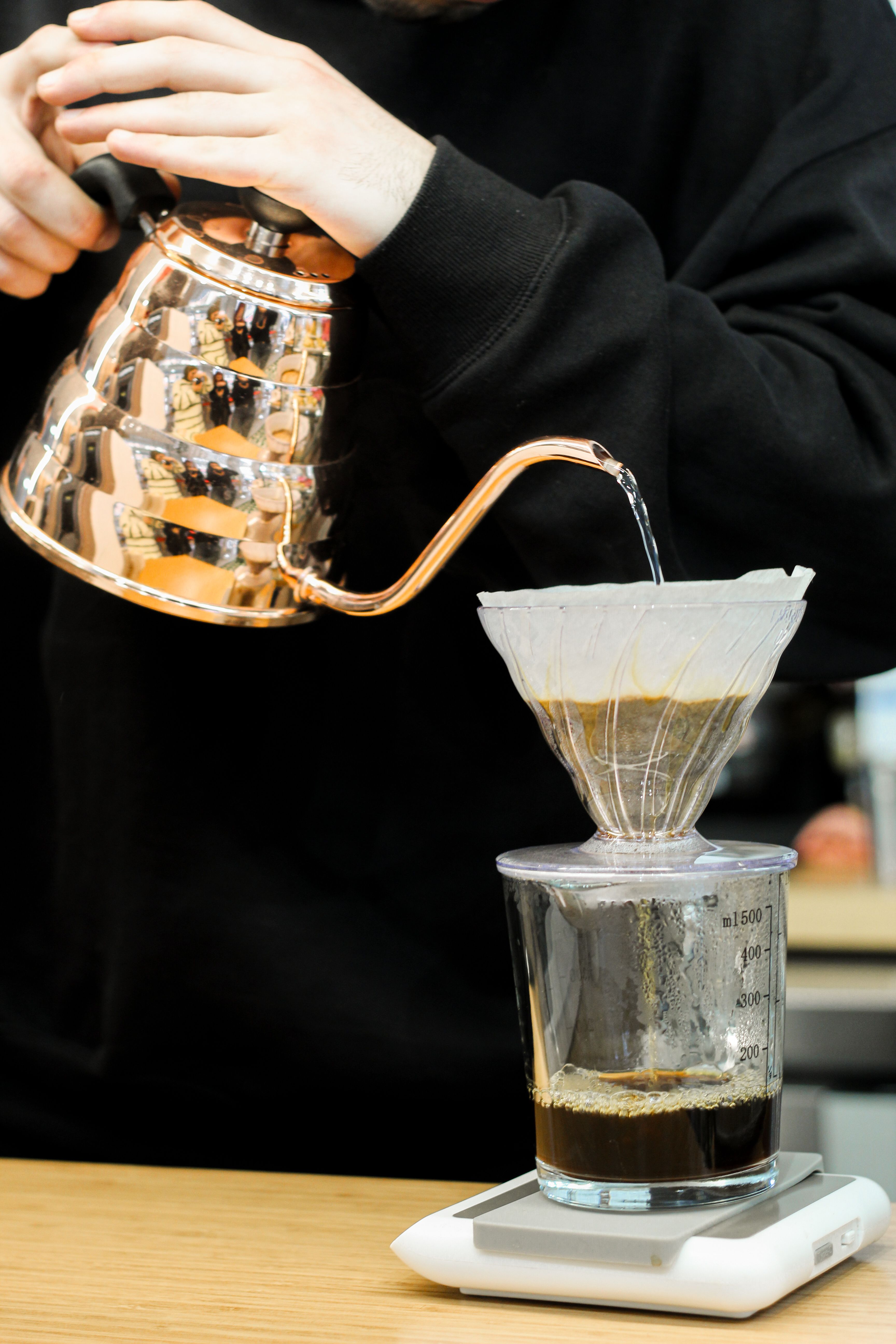
How it works: Hot water is poured over medium-fine grounds in a paper filter, in slow, controlled circles, usually over three to four minutes.
Flavour profile: Clean and bright, highlighting acidity and origin character, because the paper filter removes most of the oil.
Time required: Five to seven minutes of active attention.
Best for: People who want to actually taste the difference between origins, and who enjoy the process as much as the drink.
How it works: Finely ground coffee is forced through under nine bars of pressure in under thirty seconds, producing a small, concentrated shot with crema on top.
Flavour profile: Intense and syrupy, and the base for every milk drink from a flat white to a cappuccino.
Time required: Under a minute once the machine is warmed up, but the machine itself is the real time and money investment.
Best for: Households that already drink milk-based coffee daily and use it enough to justify the equipment cost.
How it works: A manual plunger forces water through fine grounds and a paper filter in about thirty seconds of steep time.
Flavour profile: Clean like a pour over, but with slightly more body, closer to a light espresso than a filter coffee.
Time required: Around two minutes total, including cleanup.
Best for: Anyone who travels, has limited counter space, or wants one device that makes a strong, clean cup with almost no waiting.
The fanciest machine on the counter is not the one that gets used every day. The one that survives is the one that fits the five minutes you actually have in the morning.
Irish tap water tends to be softer in the west and harder in parts of Dublin and the east, and water hardness changes extraction more than most people expect. If your coffee tastes flat or oddly sharp no matter what method you use, the water is worth checking before you blame the beans or the grinder. A basic jug filter solves most of it. Beyond that, the method matters less than buying beans that were roasted recently and ground just before brewing, whichever device ends up on your counter.



.svg)
